
 Loading...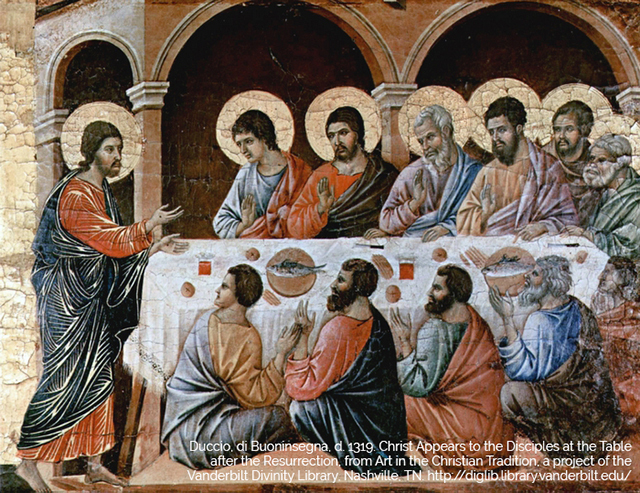
“You are witnesses of these things.” AMEN.
When I was a sophomore in high school, I made a trip one afternoon to the school library. I was not there on a class assignment. I simply had the free time to visit there and wanted to check out a book for my own reading pleasure. Yes, your bishop is a nerd.
When I was a sophomore in high school, I made a trip one afternoon to the school library. I was not there on a class assignment. I simply had the free time to visit there and wanted to check out a book for my own reading pleasure. Yes, your bishop is a nerd.
The school librarian at that time had been in that role for many, many years prior to my time in high school. She was quite strict when it came to conduct in the library. She was a great believer in rules and thought it particularly helpful that everyone should know what the rules were. So, through a series of posters that covered the walls of the library, the library rules were visible for all to see.
There was to be no running, no chewing of gum. There was to be no talking, and at no point should one student touch another. Books were to be handled with respect and carried with two hands. Shirt tails were to be tucked in at all times. Finally, there was to be no throwing of things, including up.
It might not be surprising to hear that when I arrived at the library, no other student was in the room. Only the librarian sat at her desk. I think it was a kind of perfect moment for her. None of those students, potentially given to the breaking of rules, were present. It was just the librarian and her books.
I quickly found a book that I wanted to check out. It was John Steinbeck’s, The Grapes of Wrath. I knew nothing about the story, except that it was one of those books that people who read books thought you should read.
So, carrying the book with respect and both hands, I offered the book to the librarian and let her know I wanted to check out the book. I did so without speaking, so as not to break a rule.
She looked at me. She looked at the book. Then, she looked at me again. Then, she looked at the book again. Finally, she looked at me and said, “You know, there are words in this book.”
To be honest, I did not know there were “words” in that book. Knowing that, I wanted to read the book all the more. Having told me that, having told me there were words in the book she did not think I should read made her believe I would return the book to the shelf.
Now, I am a not a brave person. But, on that day, in that library room, with that librarian and that book and those words, I did not fold. I checked out the book. And I found every word she was talking about.
There were not that many words to offend. More importantly, there were so many other words and so much story about a people and their hardships and life lived on the margins, and the hope of going West, of finding something more, something hopeful. It was a story that reminded me of my father’s mother. She could have been Ma Joad.
I tell you that story because I want to be clear today that the story of Jesus is not a story about moralism. Jesus did not enter our world and bear our pain and suffer the cross and destroy the tomb and come to us in his Resurrected Body simply to tell us not to dance or smoke or check out books with the wrong words in them.
He came into this world to set us free, to remind us that we are made in the image of God, that God has made us in order to delight in us and that our greatest work is to give thanks and praise to the God who has been wounded and yet still loves, to the God who has both made our minds and opened our minds to take on the mind of Christ.
In his Resurrected Body, Jesus comes to us while we are still afraid, still with minds that are confused, and offers his body to us, for us, to touch and know that he is real. He asks us for bread and, in return, he gives us bread, too, and a cup.
Jesus comes into the room and offers the word, Peace. “Peace be with you.”
The Resurrected Jesus who was wounded and killed, who was betrayed and reviled, who, except for the women and John, was abandoned, comes to his disciples, his friends, and has one word for them.
Now, this is where it is very helpful to know it is Jesus who is addressing these startled and terrified folk. If that were me, and I would guess if that were you, do you think the first word you or I would offer to friends who had disappointed and disappeared would be PEACE? I could think of other words to share with them. Some of those words are the kinds of words in books that you are not supposed to say or read or ponder.
Yet, Jesus says, “Peace be with you.” That is why he came into the world. The Way of Jesus is not the way of moralism, of closing the mind and avoiding the books. The Way of Jesus is the life-giving, life-changing gesture that meets our desire for violence with God’s loving and liberating choice to destroy the tomb and then quickly seek to be restored to the imperfect friends of God.
Jesus stands in their very midst, and notice that even standing before Jesus, the Resurrected Jesus, his friends have doubts. I hope you hear that as a peculiar kind of good news. Even the earliest believers, the first disciples, when standing before the newly Resurrected Jesus greet him with doubts. So, in your life, in your places of doubt, do not be discouraged. If you have more questions than answers, do not be afraid. The monk, Thomas Merton, once wrote that the person of faith can only be a person of faith if they are also a person of doubt.
When Jesus can tell they are doubting, notice he does not send them away. Rather, he gives them another opportunity for belief. He offers his body to them. Look at my hands and my feet. See the wounds that the Empire has placed upon me. See the wounds that the world demands of a prophet and a lover and a True Teacher.
Along with seeing, Jesus invites them to touch. In the Church, we speak of a sacrament as a visible and tangible sign of an inward grace. We speak of the Eucharist, of bread and wine, as sacramental gifts, symbolizing and representing and signifying the Body of God. In this lesson, the body of Jesus is both symbol and the very thing; it is the visible and the invisible, the inward and the outward.
Jesus, seeing that his friends are afraid, chooses to teach in order to help them understand why he is before them now. In teaching, he opens their minds in order that the Scriptures take on new meaning, deeper meaning, Resurrection meaning.
My high school library was a room given to rules. It was a room where a perfect day would have been one where all the books were checked in and no potential reader would enter. That makes for a very small room and a frightened mind.
Jesus, after his Resurrection, wherever he goes, the room gets bigger, the doors are unlocked, the peace is offered, the Spirit quietly descends and the minds are opened to understand the Scriptures.
At the beginning of St. Luke’s gospel lesson for today, the Resurrection enters in to find frightened and doubtful people. Through words of peace, through a broken body offered, teaching that illumines, and a call to go throughout the world to set others free, those frightened people become witnesses. Faithful witnesses, imperfect, believing while still doubting, doubting while still believing, expressing that the impossible is possible for God.
Thus it was then. May it still be so now.