
 Loading...
The Holy Spirit swirled and dipped and spun, inspired and convicted 33 churches – Baptist, Methodist, AME, Catholic, Lutheran, Episcopal, UCC, and Presbyterian faith communities along with the Compassion Coalition, all gathered Oct. 31 to address how justice is being done in Knoxville.
A scripture study, held at Mt. Zion Baptist Church, provided a forum for about 200 clergy and lay leaders from the cross-section of religious congregations to explore the biblical mandate to “do justice” and learn about strategies being used by congregations in the 21st century to live out that mandate.
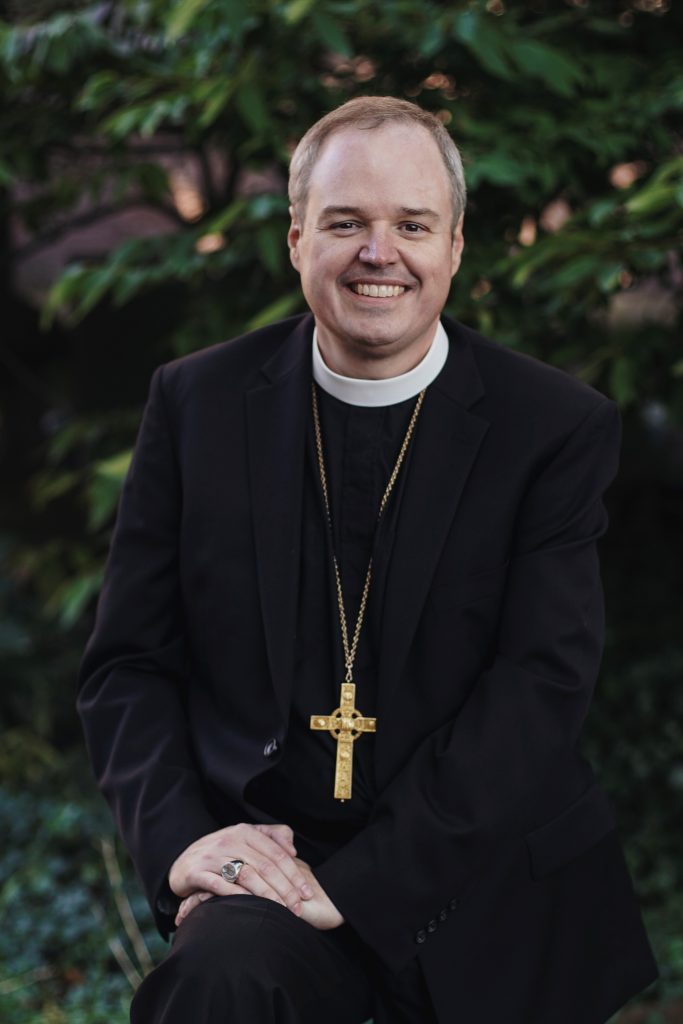
“Is it necessary, is it needed for us, the people of faith, to come together in Knoxville?” said Bishop Young as he introduced the workshop. He asked, “Is there a need for an awareness of justice in Knoxville, and if there is, is there anything we can do about it? How might we be partners to talk about justice?”
Elder Chris Battle of Tabernacle Baptist Church said that he had an “ah ha” moment a few months ago at an exploratory meeting held with the national Direct Action and Research Training (DART) Center for developing a justice ministry in Knoxville. DART is a national network of 20 affiliated grassroots, nonprofit, congregation-based justice ministry organizations that bring people together across racial, religious and socioeconomic lines to pursue justice in their communities.
At that meeting, Rev. Joseph Owens, president of the DART Board of Directors and head pastor at Shiloh Baptist Church in Lexington, Ky., shared the need for a balanced ministry and referenced these words from Micah 6:8: “What does the lord require of us but to do justice, love mercy and walk humbly with our God.”
 The words struck Battle. “The Lord requires three things of us – practice justice, love mercy and have a wonderful faithwalk with him,” he said, “Have you noticed that when Micah tells us what God expects, the first two things have nothing to do with God they have to do with how we behave toward each other.”
Battle said that we are pretty good at doing mercy – “We have programs that help individuals in need, we feed the hungry, we shelter the homeless, we minister to those who are in prison, we tutor children, we visit the sick. And we don’t do too badly with our faith walk with God.”
But, he said, “Sadly, I think we as church are weak at doing justice. We protest reactively, we promote peace after the riots we walk hand in hand on MLK Day, we mourn and pray after a tragedy like Charleston – but for an ongoing consistent systematic approach to the daily injustices that we see every day – we lack miserably. We fail to hold officials accountable for fair treatment of all people.”
Speakers at the Knoxville gathering told personal stories, instances of injustice, that inspire them to seek answers to social struggles in their communities.
Joseph Owens told a story of a man who knocked on the window of his car in the church parking lot. “Immediately I thought he was asking for money and you know what we do – we either won’t roll the window down or we reach for that $2 we’re saving for McDonalds and prepare to shoo him away.” But when Owens got out of the car to talk with the man he found he had just gotten out of prison and was sick. He had no healthcare plan because he couldn’t afford it. He didn’t have a job because he had no ID. He had tried using the Pay Day lending institutions but had maxed out – he was not able to pay them back. “And all I had for that brother,” said Owens, “was to give him $10 out of my pocket. In other words, this man was bleeding to death right in front of me with gaping wounds and I was about to send him away with just a band-aid and $10.”
Owens said he did not learn in seminary how to go about tackling a formidable mountain – how to address the lack of an ID that ex-felons have to deal with when they get out of incarceration and he did not learn how to address predatory lending.
The Rev. John Mark Wiggers, of St. James Episcopal Church on Broadway, said he has counted 15 payday lending places between his house and the church – a drive of about 4 miles. Wiggers Googled payday lending rates in Knoxville and found their basic interest rate is about 249% not including transaction fees and the other fees and charges that will add up over time.
Wiggers said that right now there is about a 300 percent difference between the top pay in a company and the average worker. In the current economy things are really hard. These loans are for people who are making less money. About 91,000 people in greater Knoxville area don’t have enough money to afford a home for a family.
“Let them work harder is the value of the market economy and the market god that we worship,” Wiggers said. “Those are the values of acquire more and don’t be sorry about its effects. I might not immediately see a problem in our communities as affecting me – I’m in a place in life where I don’t have to go to Finance 24/7 – so I could just say it’s not my problem – I can go to a regular bank. But it affects me because these are my neighbors – it affects my community.”
Battle related an incident he witnessed while sitting in his office. “I saw two middle-school girls fighting with each other in a planned, organized fight – a group of middle-schoolers had gathered shooting video of the fight with their cell phones, saying ‘You have two minutes left; you have one minute left.’ When the fight was finally broken up, the two girls hugged each other and walked down the street together. I subsequently learned that one of two things were happening – that this was an initiation into a girls’ gang or it was organized to be videoed and uploaded to fight club. It angered me more when I put out the call and tried to organize the church to patrol the streets, and honestly the response was dismal. The school even showed some resistance and I reached out to other churches and there was some hesitance. After a while my question changed, not how does the church change the culture, but how do we change the culture of the church,” Battle said.
Owens said he learned that one person and one church do not have the power to tackle and change enormous challenges and obstacles such as these.
It takes more than one person to get that kind of work done, it takes more than band-aids – it’s going to “take people like you and I banding together wielding the power of God’s people. We need Habitat houses and soup kitchens but they never get us to the root causes – they are a band-aid.”
Owens said that when we read the Bible, many times we think it’s only being addressed to us as individuals, but the Bible is primarily addressed to a community of people. The Bible from beginning to end is not only addressed to the community of people but it’s addressing that community’s relationship with God, and also addresses that community’s relationship with each other.
John Aeschbury, an ordained minister in the United Church of Christ and a senior community organizer in the DART network, serves as a leader in 22 different cities across the country who are engaged in these kinds of justice ministries. “Last spring, in 19 cities 27,000 people gathered together an average of 1,400 people a meeting to meet directly with sheriffs, mayors, and state legislatures to press for the kinds of changes we’ve talked about,” Aeschbury said.
Rev. Rich Andre, associate pastor at St. John XXIII University Parish on the UT campus, talked about success in an Ohio community where he was assigned for his pastoral years while in university. A local community justice organization with which he was involved worked on Payday Lending and was able to influence a lending rate drop from 391 percent to 28 percent.
The Rev. Kammy Young is familiar with the success faith communities joining together can have. Young is the director of contextual education and lecturer in contextual theology at Sewanee School of Theology. Previously, she was associate rector for spirituality & justice at Christ Episcopal Church in Ponte Vedra Beach, Fla. where she played a key role in the DART affiliate in Jacksonville, ICARE. Young now serves on the Board of Directors of the national DART organization.
In Jacksonville, one of the big issues keeping the folks involved with ICARE up at night was the growing rate of youth involved in crime. The power behind the faithful gathered together persuaded the State Attorney to implement a restorative justice program in high crime neighborhoods. The superintendent of county public schools was likewise persuaded to take measurable steps for changes to help children two or more years behind in reading. And, the mayor-elect to dust off the shelved “Blueprint to End Homelessness” and create a local drop-in day center for those who are homeless. Recently, the Jacksonville Sheriff’s Office made new commitments to increase its use of juvenile civil citations. Civil citations are alternatives to arrest for juvenile misdemeanor offenders and require that juveniles go through a restorative justice process instead of the formal delinquency process.
The Oct. 31 scripture study was held to determine whether there is interest about building this kind of organization in Knoxville, and the tremendous response gave a strongly affirmative answer to the question. There will be two other meetings scheduled. One, with an organizing team in November, then in December, a steering committee – an exploratory committee of about 30 clergy and lay leaders will meet. A process of listening, researching, building and “using our God-given Power” will begin to help Knoxville become more like a city where there’s a politics of justice and an economic system that assures a fair distribution of God’s bounty. Owens said, “The challenge and the invitation is a value system putting God at the center of our lives instead of ourselves.”
Owens said, “We can do this – we don’t know exactly how we’re going to get there but that’s the thing when you’re a person of faith – you can say you trust in God; you can say you believe in the Holy Spirit but today is the day for us to trust and work together to see where the spirit leads us – together we can do what we cannot do apart.”