
 Loading...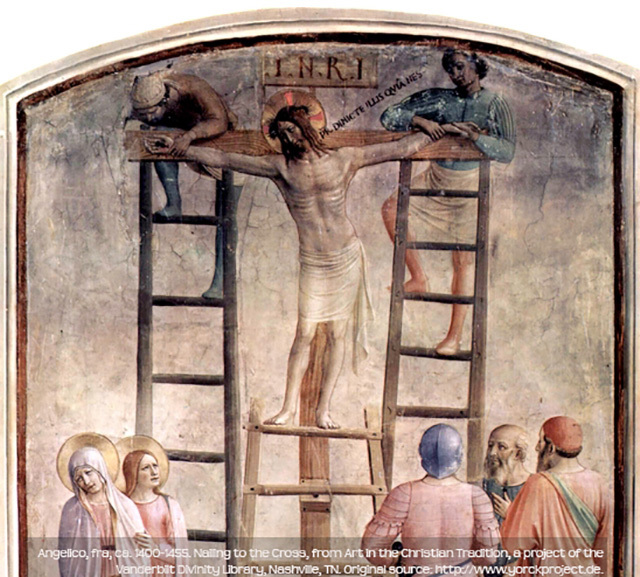
For My Brother
Reported Missing in Action, 1943
Sweet brother, if I do not sleep
My eyes are flowers for your tomb;
And if I cannot eat my bread,
My fasts shall live like willows where you died.
If in the heat I find no water for my thirst,
My thirst shall turn to springs for you, poor traveler.
Where, in what desolate and smoky country,
Lies your poor body, lost and dead?
And in what landscape of disaster
Has your unhappy spirit lost its road?
Come, in my labor find a resting place
And in my sorrows lay your head,
Or rather take my life and blood
And buy yourself a better bed—
Or take my breath and take my death
And buy yourself a better rest.
When all the men of war are shot
And flags have fallen into dust,
Your cross and mine shall tell men still
Christ died on each, for both of us.
For in the wreckage of your April Christ lies slain,
And Christ weeps in the ruins of my spring:
The money of Whose tears shall fall
Into your weak and friendless hand,
And buy you back to your own land:
The silence of Whose tears shall fall
Like bells upon your alien tomb.
Hear them and come: they call you home.
Thomas Merton
From Thirty Poems
In 1943, Good Friday came rather late, on April 23rd. Gethsemani monastery near Bardstown, Kentucky was already filled with the new life of smells and sounds that come with spring. Thomas Merton was still in his 20’s and saw everything through the lens of an eager convert, in this case, a convert to the monastic life.
Several months before Holy Week of 1943, in late 1942, Merton’s younger brother, John Paul, had paid him a visit to the monastery before being shipped out to the war in Europe. As soon as Thomas Merton greeted his brother, the following scene took place—
As soon as we were alone in his room, I began to ask [John Paul] if he didn’t want to get baptized.
“I sort of hoped I could be,” he said.
“Tell me,” I said, “how much instruction have you had, anyway?”
“Not much,” he said.
After I had questioned him some more, it turned out that “not much” was a euphemism for “none at all.”
“But you can’t be baptized without knowing what it is all about,” I said.
I went back to the novitiate before vespers feeling miserable.
“[John Paul] hasn’t had any instruction,” I said gloomily to Father Master.
“But he wants to be baptized, doesn’t he?”
“He says he does.”
Then I said: “Don’t you think I could give him enough instruction in the next few days to prepare him? And Father James could talk to him when he gets a chance…
“Take him some books,” said Father Master, “and talk to him, and tell him everything you can. And I’ll go and speak to Reverend Father.”
So the next day I hurried up to John Paul’s room with a whole armful of volumes purloined from the Novitiate Common Box—and soon he had a room full of all kinds of books that different people had selected for him to read. If he had wanted to read them all, he would have to stay in the monastery for six months. There was an orange pamphlet with an American flag on the cover, called “The Truth About Catholics.” There were, of course, The Imitation of Christ and a New Testament. Then my contribution was the Catechism of the Council of Trent, and Father Robert’s suggestion was The Faith of Millions and Father James had come through with the Story of a Soul, the autobiography of the Little Flower.
Over the next few days, John Paul Merton would read and listen to his brother, Thomas, tell everything he knew about the Christian tradition. Then he would be baptized before leaving for Europe. That is how it is with baptisms of adults; we want to make sure they know what they are doing.
When Jesus came to the river Jordan to be baptized, we surely believe he knew what he was doing. But did he need this, this baptism? Like John the Baptist, we are confused, maybe even slightly offended, by his request.
“Jesus, why are you doing this?” Yet, we expect every adult who has followed Jesus into those waters since to be theologically literate, to be able to answer why they are doing this, to be newly washed defenders of the faith.
Baptisms by water are not the only baptisms we know in the Christian tradition. There are also baptisms into suffering or sufferings as is more likely the case in our broken world.
John Paul Merton’s plane, a bomber heading for Mannheim, Germany, crashed in the North Sea right before Holy Week 1943. John Paul was severely hurt in the crash and would be cared for by his fellow soldiers on a rubber dinghy.
After three hours, John Paul died. After four days, they buried him at sea and the next day, the fifth day, the surviving companions were rescued.
“But you can’t be baptized without knowing what it is all about.”
No one at the crash asked John Paul if he knew what he was doing, if he had read enough books about suffering to know how to proceed. None of his companions offered him instruction on holy suffering or holy dying. They remained with him to the end, fellow pilgrims, adrift in a cold sea, surrounded by water, yet dying of thirst.
Bullets from every war have ripped through the bodies of soldiers and civilians, whether or not the wounded and the dead understood the geopolitical implications of the strife or not. Cancer cells attack without waiting for us to fully comprehend cell structure. Mental illness does not linger at a distance while the young woman is quizzed about the imperfections of her brain chemistry.
In John Paul’s death, Thomas Merton, eager monk, catechist in the Catholic faith, learns anew that the Christ, who greets us in baptism, also surrounds us in our grief. And not from some great distance does Jesus comfort us in our suffering.
Have you come to save us, Lord Jesus? How can you teach us now, from up there, on a cross? Who will listen to you now, now that you have failed, now that pain has found you, too?
The cross is not a story that God required. God does not require a sacred torture, not then and not now. The cross is a story that tells us what humanity still requires. We still make victims. In the cross, God chose not to be a bystander any longer. The Christ would not reign from a throne of unreachable power, but from the ditch, the ER, the shelter, the sleepless night.
“I am thirsty.” The Christ, who had been baptized in the Jordan and turned water into wine and walked on water, now begs for water while nailed to the cross. In this moment of unspeakable pain, God does not flee and God does not reject the scars of the Incarnation. God thirsts.
In Thomas Merton’s poem written in memory of John Paul, there is a poignant confidence in Merton’s words that his brother was now fully in Christ, the Christ of the baptizing waters in the bluegrass of Kentucky, the very Christ who did not abandon him in the waters of the North Sea.
In our baptisms, as living water flows over us, we confess that the Christ has marked us and we will forever be changed. In the dying of Jesus upon a tree of violence and shame, humanity has marked God and God will forever more carry wounds.
“But you can’t be baptized without knowing what it is all about.”
The cross of Jesus is a true and real place in a world that is so often false and misleading. We will not look away for where else would we look? When we find ourselves at the cross, if we have followed Jesus this far, we will know what to do. We will join him in the thirst.