
 Loading...
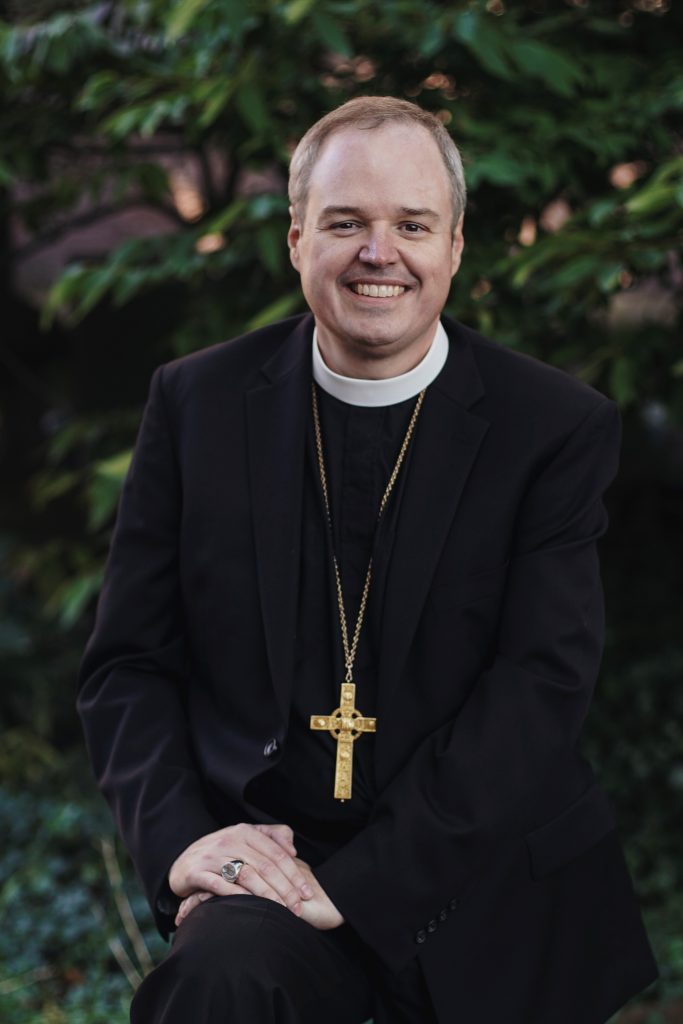
A couple of things it might be good to know about your new bishop.
First, I like visiting monasteries and going to such places often, both for personal retreats and simply to be in such prayerful, set apart communities. Though, I do not feel the call to be a monastic, and I hope my wife, Susan, is pleased by that knowledge, I do feel called to go to monasteries with some regularity, to pray and to be encouraged by those monks who have given their lives to seek to be one with God, to be fully open to a vocation of prayer and stability in community.
Second, I like to watch films about monks. Now, you may be thinking, “There are films about monks? And people watch them?” Or, wow, the new bishop needs to get out more. But, if confession is good for the soul, then, I confess, movies about monks are a passion of mine.
A few years back, there was a film, a French film entitled, Of Gods and Men. The film told the true story of a group of Trappist monks living in Algeria. The monks were all from France but had lived in Algeria for many years in a very small monastery, where they had lived in peace with their Muslim neighbors.
Beginning in the early 1990s, however, the growing threat of violence by Algerian terrorists who wished to impose a fundamentalist view of Islam upon the country made the monks reconsider whether or not they should leave their monastery and return to France. The abbot of the monastery, Br. Christian, was clear from the beginning that the monks should remain. However, the other monks were much less certain than Br. Christian and wrestled quite openly with their own personal and communal decisions to remain.
In one scene, a young monk, Br. Christophe, is deeply troubled and expresses to Br. Christian that he is afraid at the thought of dying if the terrorists attack the monastery. He did not sign up to be a martyr when he became a monk, Br. Christophe says to Br. Christian. Br. Christian’s response to Br. Christophe is to remind him that when he became a monk that he had already experienced a kind of death. He had taken up the cross and followed Jesus in becoming a monk and devoting his life to the Way.
Br. Christian, I believe, hopes his words will comfort Br. Christophe. At least in the very moment when they are offered, I do not believe Br. Christophe’s fears are lessened by Christian’s words.
This morning, you and I are miles and miles removed from Algeria and other places in our world where Christian communities experience the threat of violence because of a public commitment to Christ. We are, however, situated in the early days of this Lenten season, when we hear from St. Mark’s Gospel that Jesus understands that his ministry will include suffering and rejection and death.
Upon hearing such depressing news, the apostle Peter suggests another path to Jesus. According to the gospel of St. Mark, Peter had just confessed to Jesus that Peter believed Jesus to be the Messiah. So, he believed deeply in the ministry of Jesus. However, he did not believe that way should have such pain and hurt.
Peter believes Jesus is the Messiah, but he also has illusions about what it means for Jesus to take on that role. For Peter, the role is about wielding power and influence. It is about a glory that does not know the hurts of this world. It is about winning without struggle. It is, in other words, all illusion.
When Jesus rebukes Peter for his own rebuke of Jesus, he does so with strong language. “Get behind me, Satan” is not subtle talk. It’s dramatic, gets your attention, making it clear that Jesus will not be tempted with illusions about power and leadership.
The season of Lent is a time of self-examination, about renewing spiritual disciplines, making amends, focusing again on the things of God, letting go of distractions that keep us from right relations, both with God and the people of God. In other words, it is a time to lose our illusions. It is a season where we are called to become disillusioned.
Now, wait a minute. Isn’t disillusionment a bad thing? Isn’t that when you give up, give in, give out? Isn’t that when you fall away from your early enthusiasm, when your initial energy wanes?
Well, that’s one way of seeing disillusionment. But there is another way. There is also the wakeup call that Jesus gives to Peter. It is the strong call from Jesus to let go of your illusions in order to understand the reality of the Way that both Jesus walked and invites us to follow.
So, Lent is a season for us to become disillusioned, to let go of false images or expectations that we might hang on to regarding the Christian life and how it is lived and experienced. Realizing Peter also had illusions about what it meant to follow Jesus, we can take some comfort to know that followers of Jesus have, since the beginning, misunderstood the call of Jesus to walk in his way.
Dr. Kate Bowler is a professor at Duke Divinity School. She is in her late 30s and for some time has been a scholar with a particular focus on the prosperity gospel. The prosperity gospel is that belief that God rewards faithfulness with cold hard cash. That thinking also suggests that people living in poverty are there because of moral failing or lack of faith. If you are ill, then maybe there is some unconfessed sin in you.
Regardless of how often we hear of the story of Jesus being one of losing your life or giving all that you possess to the poor, the proponents of Prosperity Gospel continue to find a willing audience eager to believe that loving God has an immediate financial and material payoff.
Shortly after writing a study on the Prosperity Gospel, Dr. Bowler was diagnosed with Stage 4 cancer. Since then, Kate has written a memoir entitled, Everything Happens for a Reason (And Other Lies I’ve Loved). In her book, she reflects on the well-meaning ways that friends and strangers try to offer comfort to her now. Regardless of the intent, so much of what is said to her attempts to come up with a reason for the cancer or a cure for the cancer without simply acknowledging that humans experience suffering and pain and hurt. Kate’s Christian faith doesn’t shield her from illness, either. For her, she follows the Christ who has known suffering and known pain, especially as innocent victim.
She mentioned that many of the lies we tell ourselves when we are hurting or ill are ones we actually love to hear or to tell. But instead of telling those lies, Kate suggests it is important for Christians to remember that God is here, even when we are hurting, and that is enough.
Jesus gave us life by losing his own. He tells us that in order to find the true, abundant and authentic life intended for us, we also are invited to lose our illusions about certainty and safety and success. In Lent, when we consider things to give up, it is actually a good preparation for the rest of our lives, realizing no material possessions of ours will endure, regardless of how well we protect them or hide them. They will be lost, so why not go ahead and treat them as things that will pass away.
What do we believe will not pass away? We believe our life with God is eternal, that divine love is eternal, that eternal life is only found, not by avoiding pain and suffering, but by walking through it, picking up the cross, dying to all your illusions, being with the Crucified God who has given us the gift of the Resurrected Life.